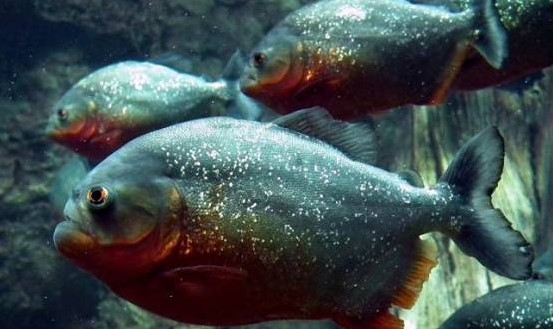
Malaysia was stirred into a frenzy after a red-bellied piranha species was discovered at Klau Dam in Raub, Pahang.
According to Malaysia’s national news agency Bernama, the fish, native to the Amazon River, was caught on August 26 by a local Malaysian resident.
How the Fish Was Found
The resident, who was fishing using a cast net, was left stunned when the net was pulled up and one of the fish among the catch was suspected to be a piranha.
Malaysia’s Director-General of Fisheries, Datuk Adnan Hussain, said that following examination, the fish was confirmed to belong to the Pygocentrus genus, part of the piranha family.
“Based on technical assessment by the Fisheries Research Institute (FRI) in Glami Lemi, Negeri Sembilan, of photographs and video footage of the fish, the observable morphological characteristics are consistent with the Pygocentrus genus, which is part of the piranha group,” Adnan said.
No Signs of a Wider Piranha Population, Yet
Despite the alarming discovery, Malaysia’s Department of Fisheries (DOF) confirmed there are no signs of an established piranha population at Klau Dam, since no further sightings have been reported since this initial discovery.
“A definitive species-level confirmation could not be made, as the physical specimen was not available for further examination. The fish was reportedly killed and discarded by the individual who caught it before an investigation could take place,” Adnan added.
Officials Urge the Public Not to Panic
Adnan urged the public to remain calm, stating that the DOF will continue conducting routine monitoring at Klau Dam and surrounding areas to identify any new developments, while also raising public awareness about the risks of releasing foreign or invasive fish species into public waterways.
He explained that releasing invasive foreign fish species into public waters can seriously harm freshwater ecosystems, local fish populations, and aquatic biodiversity overall.
“If a suspected foreign species like this is caught, do not release it back into the water. Preserve the specimen if it’s still in suitable condition, and immediately contact the nearest fisheries office for further examination and analysis, including DNA testing if necessary,” Adnan said.
Viral Claims and Public Anxiety
News of the piranha discovery spread rapidly on social media, causing considerable anxiety among Malaysians. A video circulating online at the time of the fish’s capture was accompanied by an alarming, unverified claim that the fish had eaten a crocodile.
Concerned that this potentially dangerous species may have already spread throughout local waterways, DOF investigators followed up by visiting the angler, who works locally as a fish trader.
According to his account, only one suspected piranha was caught in his net. The rest of his catch consisted of river carp (Lampam Sungai), Javan carp (Lampam Jawa), zebra tilapia, and peacock bass. The piranha reportedly died shortly after being brought ashore and was discarded in nearby bushes.
While a single piranha discovery doesn’t necessarily indicate a wider invasive population, officials are treating it as a serious enough concern to warrant ongoing monitoring, and it’s a useful reminder of why exotic pet fish should never be released into public waterways once owners can no longer care for them. As for the viral crocodile-eating claim, there’s currently no evidence supporting it, and it appears to be exactly the kind of unverified rumor that tends to spread faster than the facts during a story like this.