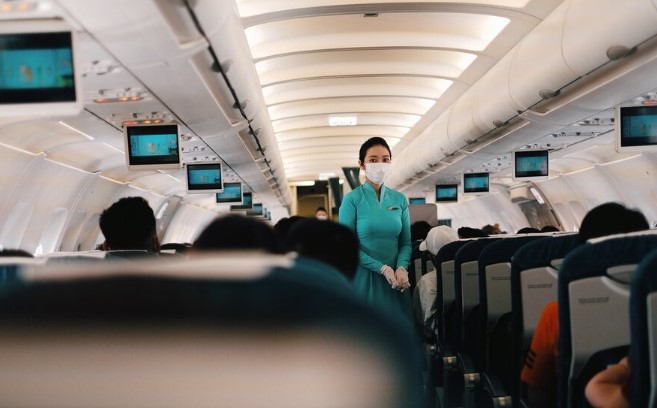
Getting a plane ready for takeoff involves more than just checking seatbelts. If you’ve ever paid close attention before a flight, you’ve probably noticed flight attendants exchanging specific coded phrases with each other.
According to Travel + Leisure, reported Tuesday, September 22, 2026, “cross-check” is one of the most frequently used phrases exchanged between cabin crew over the intercom. Together with “arm doors,” this pairing is one of the most common phrases heard during a flight.
What “Arm Doors and Cross-Check” Actually Means
According to Qantas Airlines, this phrase is announced at the start of a flight, signaling that the aircraft’s doors are armed and ready for emergency evacuation if needed. The airline also notes that passengers will typically hear the pilot ask cabin crew to disarm the doors during landing.
That said, the exact meaning of these codes isn’t identical across every airline. Justin Crabbe, a Canada-based commercial pilot and CEO and founder of Jettly and BlackJet, notes that the precise definition can vary.
“Cross-check for cabin crew can mean different things, such as locking the cabin doors to ensure they’re secured for cabin pressurization,” he told Travel + Leisure.
Crabbe also pointed out that the exact meaning of “cross-check” depends heavily on who’s saying it.
“For pilots, it generally means checking one instrument against a backup instrument to confirm both are reading accurately,” he said.
He gave an example: cabin crew perform a cross-check during takeoff to confirm that the digital airspeed indicator matches the backup analog gauge.
“If the two readings differ significantly, a decision has to be made to abort the takeoff, or to reconsider the flight once already airborne,” he explained.
What This Means for You as a Passenger
As a passenger, there’s no need to worry about these codes. The important thing on your end is simple: make sure your seatbelt is fastened, your seat is upright, and your feet aren’t blocking the aisle.
Other Codes You Might Hear on Board
A few other codes commonly used by cabin crew include:
- “Pan-pan”, signals an emergency situation
- “Code yellow”, used to describe a minor medical incident
- “Code mermaid”, a lighthearted term for a passenger who keeps switching seats throughout the flight
Next time you hear “cross-check, arm doors” over the intercom, you’ll know it’s simply part of standard pre-flight procedure, not a sign of anything unusual happening. Understanding what these routine phrases mean can make flying feel a little less mysterious, even if the exact technical definition varies slightly depending on which airline, or which crew member, you ask.