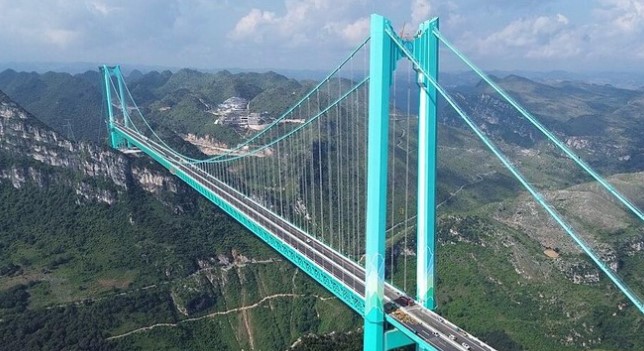
Sometimes infrastructure projects end up becoming so much more than their original purpose, and that’s exactly what’s happening in Guizhou, China right now.
The Huajiang Grand Canyon Bridge, now officially recognized as the world’s tallest bridge, has transformed from a simple transportation solution into a full blown tourist destination that’s pumping serious money into the local economy.
Not Just a Bridge Anymore, It’s an Experience
During China’s Golden Week holiday, visitors flocked to this massive structure, and interestingly, most of them weren’t just passing through. They came specifically to experience the various attractions built around the bridge itself. Stretching an impressive 2,890 meters, this engineering marvel connects the Guanling Bouyei-Miao region with Zhenfeng.
Back in April 2026, Guinness World Records officially crowned it the tallest bridge in the world, standing at a dizzying 626.01 meters above the river below. To put that into perspective, that’s taller than most skyscrapers you’d find in major cities worldwide.
Why Build It This Tall Anyway?
According to Global Times reporting on Monday (October 12, 2026), the bridge was originally constructed to drastically cut travel time across the canyon, reducing what used to be roughly a two hour journey down to just two minutes. That’s the kind of time savings that genuinely changes how people live and work in the region.
Yang Jian, the project’s lead engineer, clarified that reaching extreme height wasn’t actually the primary goal driving this project. If the bridge had been built lower, the project would have required a much longer tunnel system, which would have significantly driven up construction costs.
The extreme height, in this case, turned out to be more of a practical engineering solution than a deliberate attention grabbing feature.
What’s genuinely smart here is that from the very beginning of construction, both the bridge itself and the surrounding area, spanning more than 50 square kilometers, were deliberately planned as a tourism destination. This wasn’t an afterthought tacked on after the bridge opened. It was baked into the project from day one.
What Can You Actually Do There?
So what exactly draws visitors to spend hours exploring a bridge? Quite a lot, actually. Visitors can walk along a 796 meter tourist corridor, take in panoramic views from glass walled observation spaces, or try their hand at a 1,411 meter zip line course.
For those seeking bigger thrills, there’s bungee jumping available, along with the option to walk across narrow suspended planks hanging directly over the canyon below. If heights aren’t exactly your thing but you still want the experience, tourists can take elevators up to observation areas built directly into the bridge’s structure. Once evening falls, the attractions continue with light shows and water screen performances adding to the spectacle.
During the Golden Week holiday specifically, the area also hosted concerts, racing events, and culinary festivals, turning the whole experience into something closer to a destination festival than just a sightseeing stop. For visitors coming from the Zhenfeng area, getting there involves taking a shuttle bus to the bridge tower, then using elevators to reach the tourist zones.
The Numbers Don’t Lie
Since this tourism project started operating, the site has recorded approximately 3.3 million visits. That’s a genuinely massive number for what’s essentially centered around a single piece of infrastructure, however impressive that infrastructure might be.
Why Tourists Are Making the Trip
Cheng Guojian, a tourist from Chongqing who visited with his family, deliberately built this bridge into his vacation itinerary. He actually dedicated an entire day just to exploring the area thoroughly.
“If this bridge didn’t exist, we probably would have passed through this area anyway, but we wouldn’t have stopped and spent so much time here,” Cheng explained.
That sentiment captures exactly why this project has been such a success. It transformed a simple pass through route into a legitimate destination worth planning around.
The appeal isn’t limited to domestic Chinese tourists either. Iseult Alice Fitzpatrick, an Irish student at Harvard University, visited China back in May specifically to experience attractions like this. She worked up the courage to walk across those narrow suspended planks hanging over the canyon, decked out in full safety gear.
“This is such a fun way to see the view because you’re alone, you’re really high up, and it feels close to nature. The scenery is incredible, something I’d never seen before,” she shared.
The Real Winners Here? Local Businesses
Beyond the tourist experience itself, this bridge has genuinely transformed economic conditions for communities in the surrounding area. Since opening, Huajiang and its neighboring regions have welcomed more than 1.48 million visits. This surge in tourism has led to 124 food and beverage businesses opening up, along with 15 hotels and guesthouses establishing themselves in the area. The tourism sector alone has created employment opportunities for more than 2,000 local residents.
Huo Zhenggui, a local fruit vendor, explained how the bridge has directly improved his business operations. The bridge made deliveries significantly faster while reducing losses that used to occur during those long, winding journeys around the canyon.
“Now that the bridge is open, tourist numbers have increased and business is better than ever before,” Zhenggui shared.
It’s not just vendors feeling the positive ripple effects either. Hotel operators in the region have experienced similarly encouraging results. Wu Fuying, who manages accommodations in the area, noted a clear shift in booking patterns since the bridge opened. “The bridge has opened, and now rooms are frequently fully booked on weekends and holidays,” she said.
More Than Just a Bridge
What makes this story particularly compelling is how it demonstrates the ripple effect well planned infrastructure can have on entire communities. This wasn’t simply about building something tall enough to break a world record for bragging rights.
The project represented a genuine investment in connecting underserved regions while simultaneously creating economic opportunities that extend well beyond the bridge’s primary transportation function.
For a region that previously might have been overlooked by tourists heading to more established Chinese destinations, the Huajiang Grand Canyon Bridge has essentially put Guizhou firmly on the map for both domestic and international travelers. And given how quickly those visitor numbers have climbed since opening, it seems like this engineering achievement’s tourism potential is really just getting started.