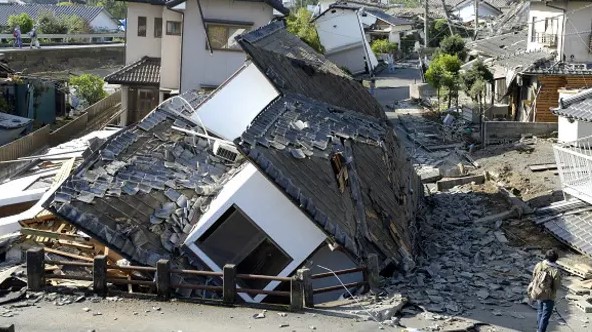
A magnitude 6.8 earthquake struck Kumamoto, Japan, on Tuesday, July 28. In the aftermath of this powerful quake, thousands of tourists canceled their travel plans.
According to data compiled by Kyodo News, cited Tuesday (August 25, 2026), roughly 174,000 hotel and ryokan (traditional Japanese inn) bookings were canceled across six prefectures in southwestern Japan, outside the earthquake’s epicenter.
Cancellations Driven by Fear, Not Just Damage
Most of these cancellations are believed to stem from concerns over transportation disruptions and potential aftershocks. Several officials have linked this trend to what they describe as “reputational damage.” According to them, tourists tended to avoid the entire region, even though structural damage was actually concentrated in only certain parts of Kumamoto Prefecture.
A surge in cancellations was also seen in areas of Kumamoto Prefecture located outside the disaster zone, including the popular tourist area of Aso.
Government Plans Subsidy Program
In response, the government is planning to launch a subsidy program covering accommodation and travel costs across all seven prefectures of Kyushu, as part of a broader relief package expected to be finalized by the end of this month.
The Scale of Cancellations
The total value of canceled bookings reached approximately 670 million yen (roughly Rp 74 billion). This figure doesn’t include Miyazaki and Kagoshima prefectures, since both did not provide data on cancellation values.
As of August 6, Kumamoto recorded 146,470 cancellations, valued at approximately 2.06 billion yen (roughly Rp 229 billion).
Prefectural authorities submitted data compiled by local hotel and ryokan associations, while Kagoshima provided figures based on its own independent survey to Kyodo News.
Kagoshima recorded the highest number of cancellations, at 111,749 cases as of August 7. This was partly attributed to disruptions on the Kyushu Expressway and the Kyushu Shinkansen bullet train service connecting Kumamoto and Kagoshima.
The prevalence of travel packages covering both Kumamoto and Kagoshima may have also contributed to cancellations in Kagoshima, even though that region actually experienced relatively minimal damage.
Fukuoka recorded the second-highest number of cancellations, at roughly 28,000, followed by Nagasaki with 14,259 cancellations, Miyazaki with 11,357, Oita with 7,810, and Saga with 1,820. Most cancellations occurred within one to two weeks following the earthquake.
About the Earthquake
The magnitude 7.1 earthquake struck around 4:27 PM on July 28. Although the quake registered at a seismic intensity of “upper 5” on the Japanese seismic intensity scale in parts of Nagasaki and Kagoshima prefectures, it did not cause major damage.
Several sections of the Kyushu Expressway remained closed for more than two weeks, while Kyushu Shinkansen line services remain suspended in certain sections.