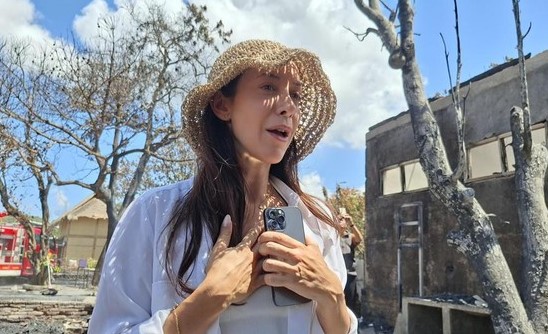
The Sade Traditional Village in Central Lombok was destroyed by fire. Moved by what she saw, a Canadian tourist now wants to help by raising international aid for the village’s recovery.
The rubble of Sade’s traditional houses, flattened to the ground, left Eli, a tourist from Canada, deeply shaken. Seeing the charred remains of this cultural heritage site, Eli felt compelled to rally international support to help rebuild Sade.
The 26-year-old traveled to Sade, Central Lombok, along with her companion, Ray, on Monday (August 24). The day before, the two had learned about the devastating fire that had destroyed dozens of traditional houses in Sade Village through social media.
“I Really Want to Help This Town and Its People”
The visitor was visibly saddened seeing firsthand the impact of the fire, which broke out on Saturday (August 22). She expressed a genuine desire to help the people of Sade affected by the disaster.
“We’re here today because we really want to help this town and its people. We love Indonesia, and the people here are so friendly. I’m hoping to start a campaign through GoFundMe or a similar platform to raise funds and increase public awareness,” Eli said in an interview at Sade on Monday (August 24, 2026).
A Place With Personal Meaning
For Eli, Sade Traditional Village holds special emotional significance. She had previously visited the area last November and witnessed firsthand the painstaking craftsmanship of local weavers producing traditional woven cloth.
According to her, a single piece of traditional fabric can take up to three months to complete. Because of this, she believes the fire has dealt a heavy blow to the economy and livelihoods of families in Sade Hamlet, Central Lombok.
“I came here to see the condition of the traditional houses that burned down. It made me really sad to see it,” Eli said.
Suggesting Fire-Resistant Materials for Rebuilding
Beyond wanting to raise aid, Eli also proposed a technical innovation for rebuilding the traditional houses that were destroyed.
“I noticed that the traditional building structure, made largely from natural materials, allowed the fire to spread extremely quickly,” she said.
Eli suggested that rebuilding Sade’s traditional houses could incorporate modern, more fire-retardant materials.
According to her, using newer materials doesn’t have to mean sacrificing the architecture and aesthetic value unique to traditional Sasak houses. Local cultural identity, she said, still needs to be preserved throughout the reconstruction process.
This step, she believes, is important to prevent similar incidents from happening again, without losing the cultural character of the Sade traditional area.
“As a tourist, I don’t want to see something like this happen again. I hope the people of Lombok and relevant stakeholders can find a way to rebuild this place using materials that are safer and more durable,” she concluded.
The Scale of the Damage
The fire destroyed 75 houses (an earlier report had cited 129 houses) and 69 art shops owned by residents of Sade Traditional Village. Several public facilities were also affected, including one mosque, four six-pillar berugak gazebos, six four-pillar berugak structures, and one thatched-roof rice barn.