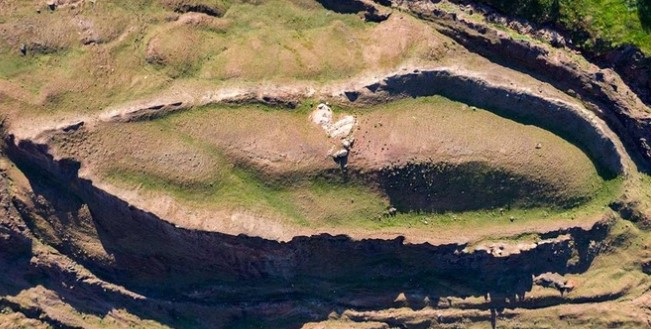
The mystery surrounding Noah’s Ark in Turkey is once again generating widespread attention. A ship-shaped formation located near Mount Ararat, Turkey, is being studied again using underground scanning technology.
A Decades-Long Research Subject
Known as the Durupinar Formation, this site has been an object of scientific study for decades. Its resemblance to a massive ship hull has also made the area a notable draw for tourists, alongside researchers, over the years.
The Latest Research Effort
The most recent study, conducted in 2026, involves the Noah’s Ark Scans team working alongside several Turkish researchers. The team is using multiple technologies, including Ground-Penetrating Radar (GPR), to scan structures beneath the surface without having to excavate the entire site.
In addition to the radar scanning, the team has also conducted core drilling to extract soil and rock samples directly from the location, providing physical material for further laboratory analysis.
Still No Definitive Proof
Despite the ongoing research, none of the findings so far have proven that the Durupinar Formation is actually Noah’s Ark. The site remains an active subject of both scientific study and debate among researchers, with no scientific consensus yet reached on its true origin.
About the Formation
The Durupinar Formation is located in eastern Turkey and measures approximately 157 meters in length. Its hull-like shape is one of the primary reasons the site has long been associated with the biblical story of Noah’s Ark.
A Draw for Both Scientists and Tourists
This striking resemblance has made Durupinar a point of interest not just for researchers, but for tourists as well. The area attracts history enthusiasts, religious travelers, and visitors drawn to the world’s unsolved mysteries, all hoping to see the formation for themselves and form their own opinions about its origins.
What’s Next
As the research continues, independent verification and peer review will likely be essential before any definitive claims can be made. Given how long this formation has drawn speculation without conclusive evidence, it’s likely to remain a subject of both scientific curiosity and popular fascination for the foreseeable future, regardless of what the current round of scanning and sampling ultimately reveals.