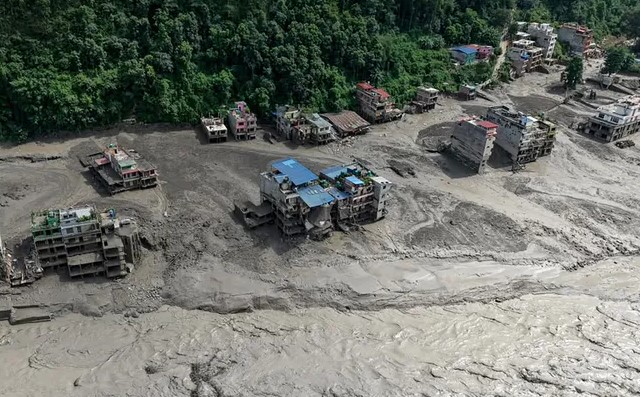
Talk about bad timing. Just as Nepal was heading into its busiest tourist season of the year, disaster struck, and now the country’s hotels are watching bookings evaporate in real time.
The culprit? A flash flood along the Bhotekoshi River that’s triggered a wave of cancellations across some of Nepal’s biggest tourist hubs, even in areas the flood never actually touched.
When Bad News Travels Faster Than Good Roads
According to the Kathmandu Post, hotels in Pokhara, Chitwan, and Lumbini are all reporting the same story: foreign tourists canceling their trips left and right, while domestic travelers are backing out too, mostly because getting around has become a nightmare.
Here’s the twist, though. In places like Chitwan, the flood itself caused zero direct damage. The real damage? Negative headlines and travel advisories that made the entire country sound like it was underwater.
Sauraha: From 8,000 Visitors a Day to Almost Empty
Take Sauraha in Chitwan, for example. This place is usually buzzing during peak season, with 125 hotels, big and small, capable of hosting up to 8,000 tourists a day.
Right now? Barely anyone’s showing up. The Regional Hotel Association says occupancy rates have crashed to below 5%.
“There are almost no tourists right now. Hotel occupancy is under 5 percent,” said Suman Ghimire, former head of the Sauraha Regional Hotel Association.
Ghimire’s own property, the 34-room Jungle Safari Lodge, has seen most of its rooms sit empty after a string of cancellations. The final blow came when the Krishnabhir section of the highway, a key route into Chitwan, got washed away by the flood, effectively cutting off overland travel.
Even though the flood never reached Chitwan itself, Ghimire says the damage to Nepal’s reputation abroad has been just as costly as physical destruction would have been.
An 80% Cancellation Rate at One Major Hotel
The story’s just as rough over at the Royal Tulip Chitwan Hotel, run by KTM Hospitality. This 65-room property has seen a jaw-dropping 80% cancellation rate.
“Tourism has been hit hard by the floods. Even though our destination wasn’t physically affected, misleading rumors and reports about the situation have caused serious damage,” said Rameshwar Sah, head of Royal Tulip.
Gunaraj Thapaliya, vice chair of the Regional Hotel Association, put it even more bluntly when describing Sauraha’s current state: aside from a handful of Chinese tourists, the area is essentially empty of visitors.
Pokhara Isn’t Faring Much Better
Pokhara, the popular tourist city in Kaski district, is dealing with its own set of compounding problems. Hari Bhujel, head of the local Tourism Council, explained that the Bhotekoshi flood, combined with damage to the Prithvi Highway at Krishnabhir, has piled even more pressure onto an already struggling sector.
“Foreign tourist season has technically started, but up to 30 percent of hotel bookings have already been canceled,” he said.
Bhujel pointed to a perfect storm of issues hurting Pokhara’s tourism: the highway closure, rising airfare, limited flight availability between Pokhara and Kathmandu, and dollar-based pricing policies for foreign visitors.
The change is visible even at the city’s transportation hub. Mustang Chowk bus terminal in Pokhara, normally packed with passengers from dawn until night, now sits noticeably quiet. What used to be 24 morning buses and 8 night buses heading to Kathmandu has shrunk down to just a couple of routes still running, to Chitwan and Lumbini only.
Even Lumbini, Buddha’s Birthplace, Isn’t Immune
The ripple effects have reached all the way to Lumbini, the historic birthplace of Buddha and one of Nepal’s most significant pilgrimage sites.
Lilamani Sharma, head of the Lumbini Hotel Association, said international tourists routing through Kathmandu have started canceling their Lumbini bookings, including reservations for the upcoming peak season in October and November.
“The Bhotekoshi flood has created this impression that the entire country is gripped by fear and hardship. That’s why we need to reassure the international community that Lumbini is safe and accessible,” said Himal Upreti, acting member secretary of the Lumbini Development Trust (LDT), the government body overseeing the historic site.
The Bigger Picture
What’s happening in Nepal right now is a textbook example of how a localized disaster can spiral into a nationwide economic problem, not through direct damage, but through perception. While the physical destruction from the Bhotekoshi flood was largely contained to specific areas, the reputational fallout has spread across the entire tourism industry, hitting cities that never even saw floodwaters.
For Nepal’s tourism sector, the road to recovery may depend less on rebuilding infrastructure and more on rebuilding international confidence.