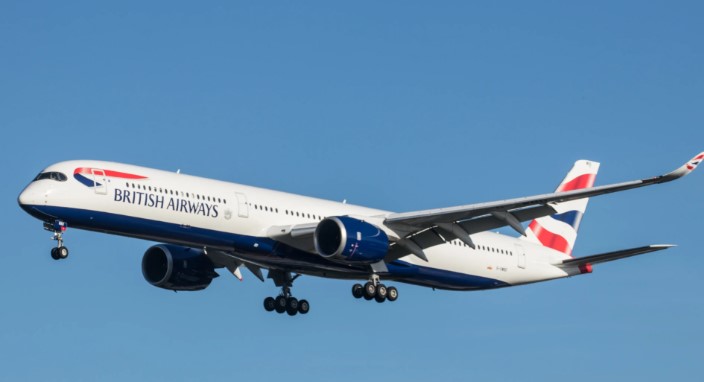
Flying can already feel nerve wracking for plenty of people, so news about a flight turning around mid journey tends to grab attention fast. That’s exactly what happened on a recent British Airways flight, and while the airline downplayed it as a minor technical issue, the details reveal a bit more nuance worth understanding.
What Actually Happened Up There
According to Fox News reporting on Saturday (October 17, 2026), a British Airways flight was traveling from London Gatwick Airport to Faro, Portugal on October 13, 2026. About an hour into the flight, the aircraft made the decision to turn around and head back to London instead of continuing to its original destination.
An airline spokesperson confirmed the incident, attributing it to what they described as a minor technical issue.
“We’ve apologized to customers for the delay to their journey, and our team is working hard to get their travel plans back on track,” the spokesperson stated.
The Crack That Started It All
Reports indicate that a cracked window led to this diversion, though British Airways kept their official statement fairly vague, simply referencing an unspecified technical issue rather than confirming the window crack directly. However, flight tracking service AirNav Radar provided some additional context, revealing that during this incident, the flight crew transmitted an emergency code 7700.
For anyone unfamiliar with aviation terminology, that code carries real significance, which is exactly why aviation experts weighed in to help explain what it actually means.
What Does Code 7700 Actually Mean?
Steven Arroyo, an aviation safety expert and retired United Airlines captain based in Florida, explained that 7700 functions as a universal code pilots can enter into an aircraft’s transponder to alert air traffic controllers about an emergency situation.
“It lights up on the radar screen, and lets air traffic control know something is happening. The code itself doesn’t tell controllers exactly what’s wrong,” Arroyo explained.
That’s an important distinction worth understanding. Transmitting 7700 doesn’t necessarily mean catastrophic danger is unfolding, it’s more of an attention flag that tells ground control “pay attention to us right now,” without specifying the exact nature of the problem. The actual severity gets communicated separately through radio communication with the crew.
How Serious Can a Cracked Window Actually Be?
Arroyo provided some genuinely useful context about how aircraft windows are constructed and why crack severity can vary significantly. According to him, airplane windows are built in multiple layers, which means how serious a crack actually is depends heavily on exactly where the damage occurs within that layered structure.
In more serious situations, damage to these layers could potentially affect the aircraft’s ability to maintain cabin pressure, which is obviously a significant safety concern given how pressurized cabins work at cruising altitude.
However, Arroyo also offered some reassurance for less severe scenarios. If the crack isn’t particularly serious, it’s entirely possible the crew simply chose to prioritize safety by deciding to land as a precautionary measure, rather than continuing the flight with any uncertainty about the window’s structural integrity.
This distinction matters a lot when evaluating how concerned passengers should actually be about this type of incident. Turning back doesn’t automatically mean a near catastrophic failure was occurring, sometimes it simply reflects good judgment and an abundance of caution from a well trained flight crew.
What Should You Do If You Notice Something Like This?
Perhaps the most practical takeaway from Arroyo’s comments involves what passengers themselves should do if they happen to notice window damage during a flight. His advice is refreshingly simple: don’t hesitate to tell a flight attendant rather than assuming the crew already knows about it.
This is genuinely solid advice for any air traveler. Flight crews rely heavily on passenger observations in situations like this, and assuming “someone else probably already mentioned it” could potentially delay important safety responses.
If you spot something that looks off, whether it’s a window crack, unusual noise, or anything else that seems concerning, speaking up immediately is always the better choice over staying quiet and hoping someone else handles it.
Why This Story Matters Beyond Just One Flight
Incidents like this one tend to generate significant public interest, partly because aviation safety concerns resonate deeply with anyone who regularly flies, and partly because terms like “emergency code” and “turned back mid flight” naturally sound alarming without proper context.
What this particular incident actually demonstrates is a system working as intended. The crew identified a potential issue, took appropriate precautionary action, communicated the situation clearly to air traffic control through standard protocols, and prioritized passenger safety over schedule convenience.
While the delay and disruption certainly inconvenienced passengers who had plans in Faro, the alternative, continuing a flight with unresolved uncertainty about structural integrity, would have represented a far riskier choice.
For nervous flyers specifically, understanding these nuances might actually provide some comfort rather than additional anxiety.
Modern aviation protocols are specifically designed to err heavily on the side of caution, meaning crews are trained and encouraged to turn back or divert whenever there’s genuine uncertainty, even when the underlying issue ultimately turns out to be relatively minor.
That’s exactly the kind of system you’d want operating when you’re thousands of feet in the air with limited options if something actually does go seriously wrong.