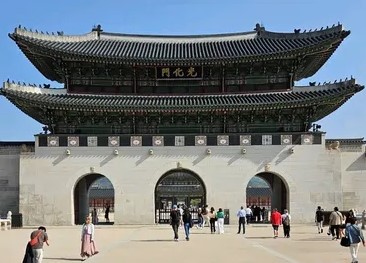
Three foreign tourists were caught smoking in a restricted area of Gyeongbokgung Palace in South Korea, casually sitting and lighting cigarettes right in front of Geunjeongjeon Hall, despite the entire palace grounds being a designated no-smoking zone.
Incident Caught on Camera
The incident was captured on camera and reported by Channel A on September 29, 2026. A bystander who witnessed the smoking asked palace staff to intervene, since the area was clearly marked as prohibited for smoking.
After finishing their tour of the palace, the three men were directed by staff to exit the premises. They reportedly still had time to take photos near the entrance gate before leaving.
Tourist Denies Smoking When Questioned
One of the men, who identified himself as being from China, denied having smoked when questioned by reporters. He claimed the journalists were mistaken and even asked whether there was any smell of cigarette smoke on him.
A tour guide present at the scene said that smoking restrictions had already been clearly communicated to tourists beforehand.
“Who’s smoking inside the palace? Smoking is prohibited at all tourist sites,” the guide said, as quoted by The Asia Business Daily on Thursday, October 1, 2026.
According to the guide, staff had also previously reminded the Chinese tourists specifically about the no-smoking policy. No-smoking signs are posted at multiple points throughout the palace complex, making the rule hard to miss.
Not an Isolated Incident
This particular group of tourists wasn’t the only concern highlighted in the report. Several cigarette butts were also found near a rest area that technically falls within the no-smoking zone, suggesting the issue may be more widespread than just one incident.
The same report also noted other foreign tourists entering restricted areas and approaching installations marked with “do not touch” signs, pointing to a broader pattern of visitors disregarding posted rules.
A South Korean tourist at the scene said palace rules should be respected by all visitors, regardless of nationality.
“This relates to manners and public order in our country, so it should be respected,” they said.
What the Rules Actually Say
Gyeongbokgung enforces a strict no-smoking policy across its entire palace grounds. Under the visitation rules set by the Royal Palaces and Tombs Center, visitors caught smoking can be asked to end their visit or leave the premises immediately.
Visitors who fail to follow the rules or ignore staff instructions can also be denied entry or required to stop their visit altogether. Beyond losing access, smoking in designated no-smoking zones at South Korean cultural heritage sites can result in a fine of up to 100,000 won.
A Recurring Problem at Gyeongbokgung
This isn’t the first time this kind of incident has occurred at Gyeongbokgung. Back in August, singer and actor Choi Siwon reportedly intervened himself, warning a foreign tourist who was about to light a cigarette near the palace entrance while Choi was filming a promotional video. After being warned, the tourist put the cigarette away.
Similar Issues at Other Seoul Attractions
Problems with foreign tourists smoking in restricted areas have also surfaced at other popular Seoul destinations, including Cheonggyecheon Stream.
In one previous incident, several foreign tourists were seen sitting on stone steps while smoking. When informed that the area was smoke-free, one man from China reportedly responded in Mandarin with “Tingbudong,” meaning “I don’t understand.”
Cheonggyecheon has also drawn attention for other tourist behavior issues, including visitors taking “lucky coins” from the Pal Seokdam fountain, and some even bathing directly in the stream.
The Seoul Metropolitan Government has designated the entire Cheonggyecheon area, spanning 8.12 kilometers from Cheonggye Plaza to its confluence with Jungnangcheon, as a smoke-free and alcohol-free zone. Violating these rules can also result in fines.
What This Means for Travelers Visiting Korea
For tourists planning a visit to Gyeongbokgung or other cultural heritage sites in South Korea, these incidents serve as a clear reminder to pay close attention to posted rules, particularly around smoking, restricted areas, and site-specific etiquette.
Given that fines and immediate removal from the premises are both real consequences, visitors unfamiliar with local regulations would be wise to ask tour guides or staff directly if there’s any uncertainty about what’s permitted within a given area.