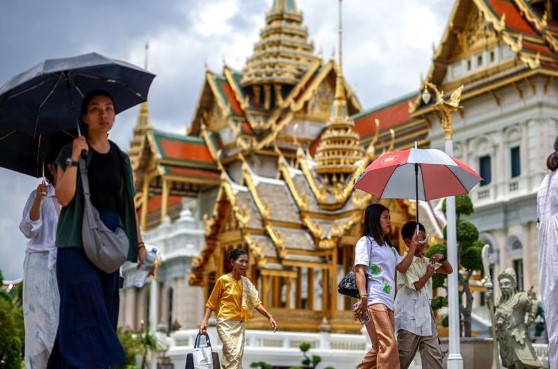
Thailand still needs millions of foreign tourists to keep its economy running. At the same time, more and more Thai citizens are growing frustrated with some tourists and expats who they feel disregard local rules, culture, and laws. That tension has become a hot topic across the country.
Tourism Remains Central to Thailand’s Economy
Tourism is one of Thailand’s main economic engines. The sector contributes roughly one-fifth of the country’s national economy and supports millions of livelihoods, from hotels and restaurants to tour operators and small vendors.
Before the pandemic, Thailand set a record with nearly 40 million foreign visitors in 2019. That peak hasn’t fully returned.
Last year, foreign visitor numbers reached about 32.9 million. The Tourism Authority of Thailand (TAT) has even trimmed its international visitor target for 2026 down to 30-34 million, citing expensive airfares, global economic uncertainty, and stiff competition from neighboring countries like Vietnam and Malaysia.
For people working in the tourism industry, those numbers are a clear sign that Thailand still needs foreign visitors. But for many residents, the issue has moved beyond simple visitor counts.
Viral Incidents Fuel Public Anger
In recent months, Thai social media has been flooded with videos and reports capturing foreign tourist behavior that has sparked public outrage. These incidents range from public disturbances and rule violations to conflicts with locals and alleged illegal business practices that exploit loopholes in Thai law.
“Thai people love the money that tourism brings. But we are also very nationalistic, and we don’t like seeing foreigners behave as they please,” said Voranai Vanijaka, a Thai political and social commentator, as quoted by scmp.com on Monday, September 28, 2026.
According to Voranai, the current wave of frustration isn’t only about vacationing tourists. Many residents take issue with foreigners who stay longer, start businesses, or use Thai nationals as nominees to control businesses that are legally restricted to foreign ownership.
One Man’s Effort to Bridge the Gap
Amid the wave of negative headlines and viral conflicts on social media, some people are working to build better relationships between Thai residents and the foreign expat community. One of them is John Ho, a man from Hong Kong who has lived in Chiang Mai for about a decade with his Thai wife.
This month, Ho launched CosmoLocal CNX, a government-backed program designed to connect the digital nomad community with local residents through workshops, discussions, and shared meals.
Ho believes many newcomers genuinely want to integrate with local society, but don’t always know how.
“There’s a transition period when someone arrives as a tourist. At that point, they might not care much about the local culture or language,” Ho said.
“But when they want to stay longer and make this place their home base, the question becomes: how do you make friends here? It helps to learn a bit of Thai and understand the rules around business and work,” he added.
Why Chiang Mai Feels Different
The program taps into Chiang Mai’s distinct character, a slower pace of life, strong Lanna cultural heritage, and a calmer city atmosphere compared to Thailand’s more popular southern tourist destinations.
According to Ho, this environment is very different from the island resort areas known for parties and nightlife, places that often become flashpoints for conflict between locals and foreign visitors.
“We’ve seen that tension. But most digital nomads actually do care. Maybe they just need more opportunities to meet local residents. This is a first step toward making that happen,” he said.
Are the Conflicts Overblown?
Ho also suggested that the conflicts trending on social media don’t always reflect what’s really happening on the ground.
“The news cycle keeps spinning. I think a lot of things get exaggerated. Everyone in Thailand welcomes foreigners,” he insisted.
A Balancing Act Ahead
Thailand’s challenge captures a tension familiar to many popular tourist destinations worldwide: welcoming the visitors and long-term residents an economy depends on, while protecting local culture, laws, and community trust. Programs like CosmoLocal CNX suggest that cultural bridge-building, alongside enforcement of existing rules, may be part of how Thailand tries to manage that balance going forward.